
Hounded: The Iron Druid Chronicles, Book One
 A saw the rating a friend of mine made for the second book in this series, and it sounded like a concept I would like, so I tried to start with this one. It just didn't grab me and I did not finish it. I don't think it was terrible writing, but the humor seemed a little flat and I just never got into a groove with it.
You Are a Badass: How to Stop Doubting Your Greatness and Start Living an Awesome Life
 I still have some doubts about the Law of Attraction, but the way Sincero presents it makes me at least want to set my skepticism aside and consider it.
The Two Hotel Francforts: A Novel
 Although the ending was bittersweet, I still rate this book pretty high. I thought it was well-written overall. There were some long monologues and I didn't like the way the one chapter was a quoted chapter from a book written by another character about his wife's suicide (NOT a spoiler because the narrator tells you about it at the very beginning). I felt the narrator's character showed real growth throughout the story, though I didn't like where and with whom he ended up.
How to See Yourself As You Really Are
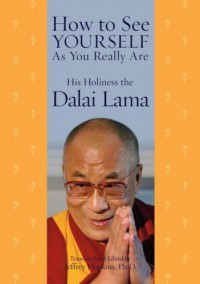 The thing about having to practice over time to attain spiritual awakening makes it hard for me to say whether I will really get it from what the Dalai Lama sets forth here. I get some of his reasoning on an intellectual level, but I haven't become enlightened yet.
 I did particularly enjoy reading this book. I will pick up this book from time to time to review the reasoning/mindful approach he sets forth. Who knows if I will ever get anything out of it. From what I've read of the Zen schools, I shouldn't have that expectation.
Mr. Monk is a Mess
 (2.93/5.00)
This was just as ridiculous as the TV show, which is a compliment. That's why I watched the show. If you don't like the far-fetched comedic mystery with no regard for actual police procedure, don't read or watch Monk.
I think the best part of this book (and I have not read any others in the series) was the transition of Natalee Teeger from Monk's assistant to cop (and character in her own right). I wouldn't mind reading a cozy series based around her.
Walden on Wheels: On The Open Road from Debt to Freedom
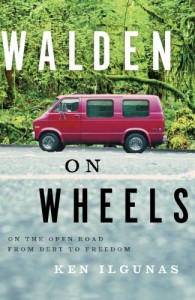 I really enjoyed this book. It was full of really interesting adventures by the author, and the part of living in the van actually only took up a few chapters at the end. I could see some parallels in how he described his spartan living, and even made tables to show how it worked out financially, which parallels Thoreau's original work (as best as I recall all these years later).
The author's note at the beginning assures us that everything is true and that some things were shifted around for the purposes of good storytelling, and you might be able to pick that out (I had a feeling a few times that the timeline didn't quite work out with what he was telling us). In spite of that, I got a lot of enjoyment on reading this book, and though I am fascinated with the amount of asceticism he has achieved, I think my approach would be less like Thoreau, and more along the lines of a co-housing arrangement. (I'm still working on convincing a few people of that.)
Catch-22
 I really could not get into a groove with this book. The circular, disjointed way the story was told frustrated me to the point that I gave up 2/3 of the way through. It was intentionally written that way, of course, but since I didn't have to read this, I opted out.
Even though I didn't enjoy reading it, I think the circular structure of the story and the circular, nonsensical dialogue were effective techniques to convey the circular reasoning and nonsense of Catch-22, the central regulation in the story.
I may read the last 1/3 someday, but I doubt it.
Self Leadership and the One Minute Manager: Increasing Effectiveness Through Situational Self Leadership
 Modern management babble. Now we will all run through the halls hand-in-hand. We will get promotions, raises, and by next year we will be running the company. Yes, I am known at the office as the cynic.
The self-leadership model is not completely without merit, but it approaches things as if we just buck up and be positive, then everything will be all right. It doesn't take into account that there is more in the world than just a good attitude, and it doesn't fix everything. I suggest you find the Situational Self Leadership Model online and download the .jpg or .gif. That's the gist of it all.
Mockingjay (The Hunger Games, Book 3)
 Rating (1 to 5): 4.57
Strong finish to the series, but what age was this written for? It seemed advanced for a Y.A. audience. PTSD, murder, prostitution, torture, political double-dealing. Younger audiences probably wouldn't get the nuances of some of these themes, though I thought they were handled well. The damage that was done to all the victors, psychologically, seemed real, and I could really feel it at times.
There were certain things in how it ended that I liked, but will not reveal those here.
Catching Fire (The Hunger Games, Book 2)
 Rating (1 to 5): 3.5
(I could have rounded this up to 4 stars, I suppose, but I just didn't feel like it should get the same rating as its predecessor.)
This book was very predictable. Maybe not every detail, but once the story was set in motion, I knew where it was going in order for a third book to be possible. I still enjoyed reading it, and I liked the concept of the arena in this one. The clockwork of it made it less suspenseful, but I guess that was necessary for the plot. Overall, it was a good setup for the third book, which is really all they could do with the story.
The Hunger Games (The Hunger Games, Book 1)
 Rating (1 to 5): 4.07
I first saw the movie based on this novel, and now that the second film releases this week, I wanted to make my way through the respective books. Although I feel the film was just average, the book was much stronger. Important characters were dropped for the film, and scenes were changed or cut. The reason for most of those changes are a result of the book being in first person. There was so much of the story that was the working of Katniss' mind that couldn't be shown through a visual medium. They also added scenes to emphasize how much the system was against them. Most of those threats were perceived threats in the book, with the seriousness and depth of the threats saved for the very end when they actually emerge from the arena.
The Swerve: How the World Became Modern
 I thought this book was going to be about how De Rerum Natura influenced the Renaissance, but that part of the story was mostly confined to the last two chapters. The book focused more on the climate in which Poggio found himself when he came across the manuscript, and aspects of his career that wasn't really related to the reintroduction of the poem by Lucretius. It was all very interesting, but not what I expected based on the jacket cover.
The English Assassin
 I did not like this one as much as the first and third in the series. The structure seemed to be a little loose, and some of the plot had too much of a Dan Brown/Illuminati feel to it. However, I liked the parallels between art restoration and atonement, as well as personal healing as restoration.
Demi Monde Part 1 Winter (The Demi-Monde)
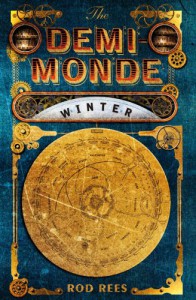 I think this is a good book, but average. I felt the author had set up some items, but never followed through with them. As a result, he never accomplished a great plot. Just average.
I especially had a hard time with the character arc of Trixie, but I set aside my disbelief to see where he was going with it. That wasn't fully resolved in this book.
I liked the book enough that I will try the second in the series and see if he had a better go at that one
Faith of Epicurus (Goldbacks)
 This book is not an analysis of Epicurean philosophy, but is rather a look at Epicurean philosophy in the historical context in which it was developed. I learned a lot about the development of the schools of Socrates, Plato, Aristotle and Epicurus and how they related to how Greece was changing politically at the time (and in the preceding decades/century). It helped me better understand why Plato thought this, or Aristotle thought that. I really got a lot out of this book.